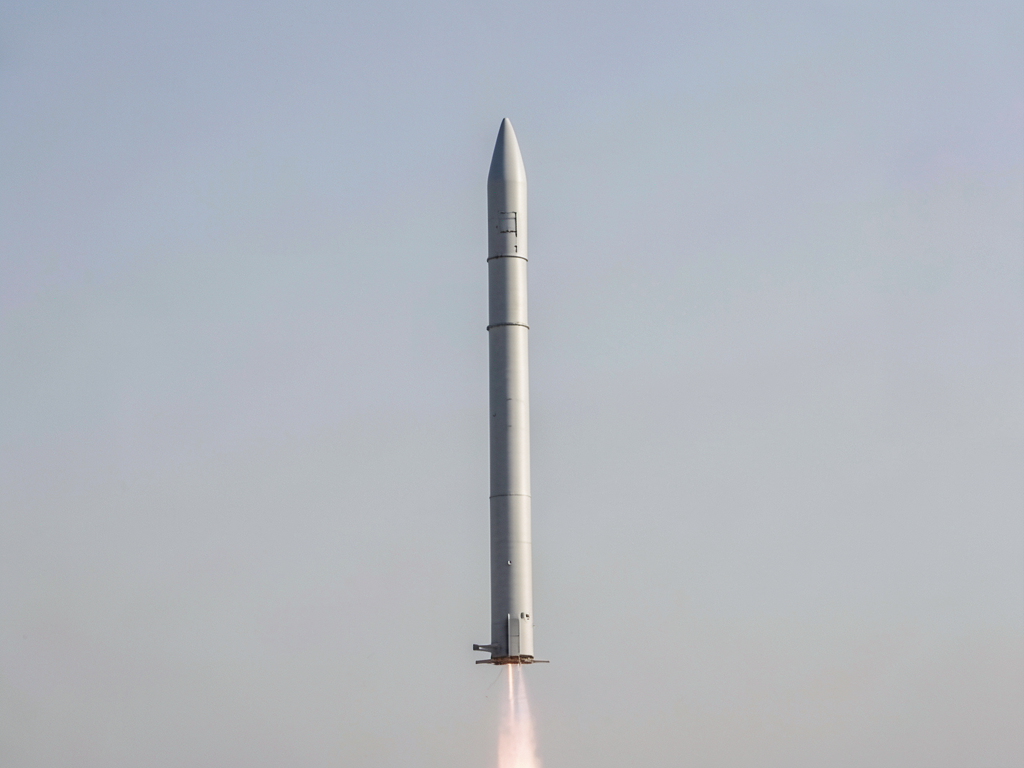
North Korea launched approximately a dozen short-range ballistic missiles toward the East Sea on Thursday, marking the latest escalation in a region already tense with border disputes and diplomatic uncertainty.
South Korea’s Joint Chiefs of Staff confirmed the missiles were fired from the Wonsan area on North Korea’s east coast, with military analysts now examining flight distances and technical specifications. Seoul immediately heightened surveillance operations and reinforced its defense posture through coordinated intelligence-sharing with the United States and Japan.
Japan’s Coast Guard issued warnings to vessels in the area, urging ships to remain vigilant and avoid any debris from the missile tests. Tokyo’s Defense Ministry had earlier detected what appeared to be a ballistic missile launch, though the projectiles reportedly fell into the sea without causing damage.
The missile barrage comes amid sharply deteriorating relations between the two Koreas. Earlier this month, three South Korean soldiers were wounded by a landmine explosion along the heavily fortified Demilitarized Zone. A joint investigation by Seoul and United Nations officials concluded that North Korea had planted the mines more than a year ago, prompting South Korea to accuse Pyongyang of violating the 1953 Armistice Agreement.
South Korean President Lee Jae Myung proposed military talks last week aimed at clarifying the precise border location and restoring communication channels between the two nations. Pyongyang has not responded, and Kim Yo Jong, the influential sister of North Korean leader Kim Jong Un, dismissed the overture as a “farce.”
Thursday’s launch follows a pattern of weapons testing by North Korea in recent months. Pyongyang has showcased new military technology including a precision-guided torpedo system and an intermediate-range hypersonic missile, both reportedly incorporating artificial intelligence capabilities. In October, North Korea fired multiple ballistic missiles shortly after US President Donald Trump hinted at the possibility of a summit with Kim Jong Un.
The timing of these launches has raised concerns in Seoul that South Korea could be marginalized in any future nuclear negotiations between Washington and Pyongyang. Trump recently downplayed the likelihood of an imminent summit while maintaining that his relationship with Kim remains positive.
The Korean Peninsula remains technically in a state of war, as the 1950-53 conflict concluded with an armistice rather than a formal peace treaty. The Demilitarized Zone separating North and South Korea is among the world’s most heavily militarized borders, and incidents there frequently trigger heightened tensions.
Regional security experts warn that North Korea’s continued weapons development and testing pose challenges not only for South Korea and Japan but for broader stability across the Asia-Pacific region. The international community continues to monitor Pyongyang’s military activities closely, particularly as diplomatic pathways remain uncertain and border incidents multiply.