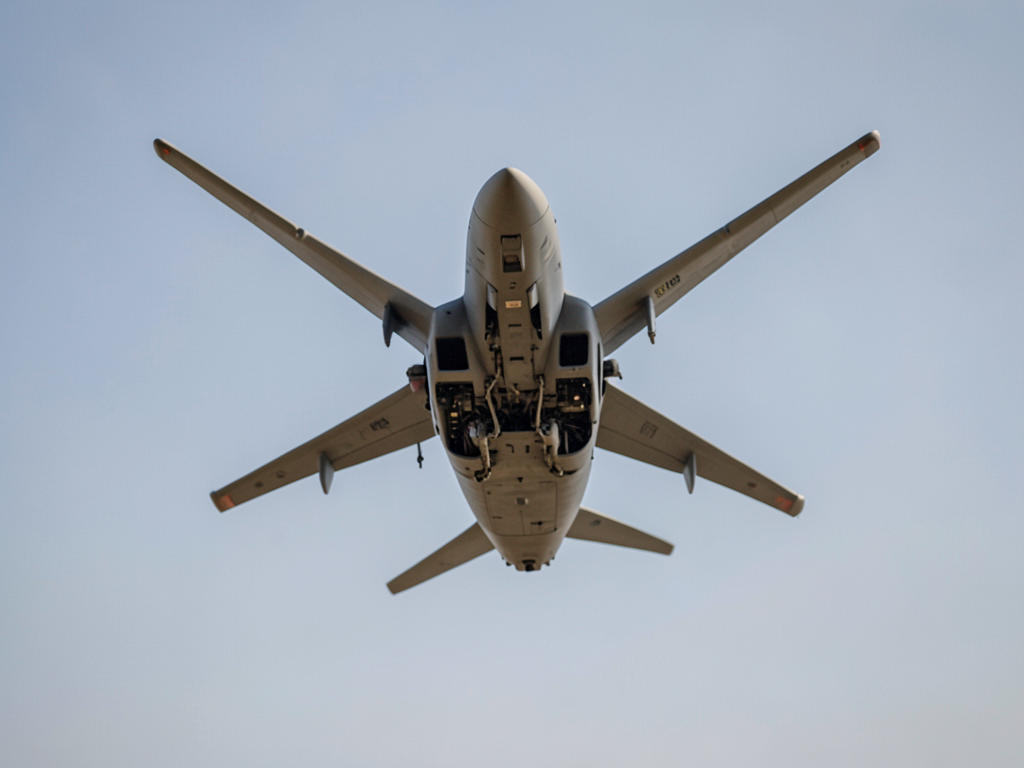
Iran’s Revolutionary Guard announced Friday it had intercepted and destroyed multiple American reconnaissance drones over Qeshm Island in the strategically vital Strait of Hormuz, marking a sharp escalation in military confrontations between Washington and Tehran that could reshape security dynamics across South Asia.
The Islamic Revolutionary Guard Corps reported downing one MQ-1 combat drone and two MQM-170 reconnaissance aircraft using advanced air defense systems and electronic warfare capabilities. Iranian military officials now claim to have destroyed 72 American drones of various types since tensions began intensifying earlier this year, including 16 MQ-1s and 56 MQ-9s.
Qeshm Island sits at the northern entrance to the Strait of Hormuz, the narrow waterway through which roughly one-fifth of global oil supplies pass daily. Any sustained military conflict in this corridor would immediately impact energy markets worldwide, with direct consequences for Pakistan’s already strained fuel import bills and economic stability.
The drone incidents come as Iran delivered a nuclear proposal to the United States through Qatari mediators, but with a significant catch. Tehran has set seven non-negotiable conditions that Washington must fulfill before any substantive diplomatic discussions can begin.
Ali Bagheri, deputy secretary of Iran’s Supreme National Security Council, made clear Friday that Iran would no longer accept written promises from American negotiators. “Iran must see practical actions by the US with its own eyes,” Bagheri stated, signaling deep mistrust after what Tehran describes as 18 months of violated commitments.
Iran’s demands reportedly include lifting American sanctions, releasing frozen Iranian assets worth billions of dollars, and payment of war reparations following military strikes that began in February. Washington has countered that nuclear weapons development must be addressed in any initial negotiations.
The February attacks by US and Israeli forces targeted critical Iranian infrastructure including natural gas refineries, creating severe energy shortages inside Iran. The conflict subsequently spread across the region, with Iranian-backed forces in Lebanon and Yemen launching strikes against Israeli and Gulf state targets.
Meanwhile, Iran’s top security official Mohsen Rezaei traveled to Moscow Thursday for extensive talks with Russian President Vladimir Putin. The three-hour meeting focused on strengthening bilateral cooperation, including a proposed pipeline to transport Russian natural gas through Iran to neighboring countries.
This infrastructure project carries particular significance for Pakistan, which has long sought reliable energy supplies and has previously explored gas pipeline options with Iran. Any new Russian-Iranian energy corridor could eventually offer Islamabad alternative import routes, though American sanctions would complicate Pakistani participation.
Rezaei emphasized that such economic partnerships would reduce Washington’s ability to pressure Tehran through isolation tactics. Russia and Iran, both facing heavy Western sanctions, have deepened their strategic alignment since Moscow’s 2022 invasion of Ukraine.
Egyptian Foreign Minister Badr Abdelatty has been conducting urgent diplomatic consultations with his Iranian counterpart Abbas Araghchi, marking their second phone conversation since Tuesday. Cairo is pushing all parties toward flexibility and compromise to prevent renewed large-scale military confrontation.
The timing adds urgency to regional diplomacy, with American midterm elections approaching and former President Trump refusing to rule out resumed combat operations afterward. Iranian officials have warned of wider retaliation if hostilities restart.
For Pakistan, the escalating US-Iran crisis presents multiple challenges. Islamabad maintains complex relationships with both Washington and Tehran, shares an 900-kilometer border with Iran, and depends heavily on Middle Eastern energy supplies that could be disrupted by Strait of Hormuz closures. Pakistani officials are monitoring developments closely while maintaining public neutrality in the dispute.