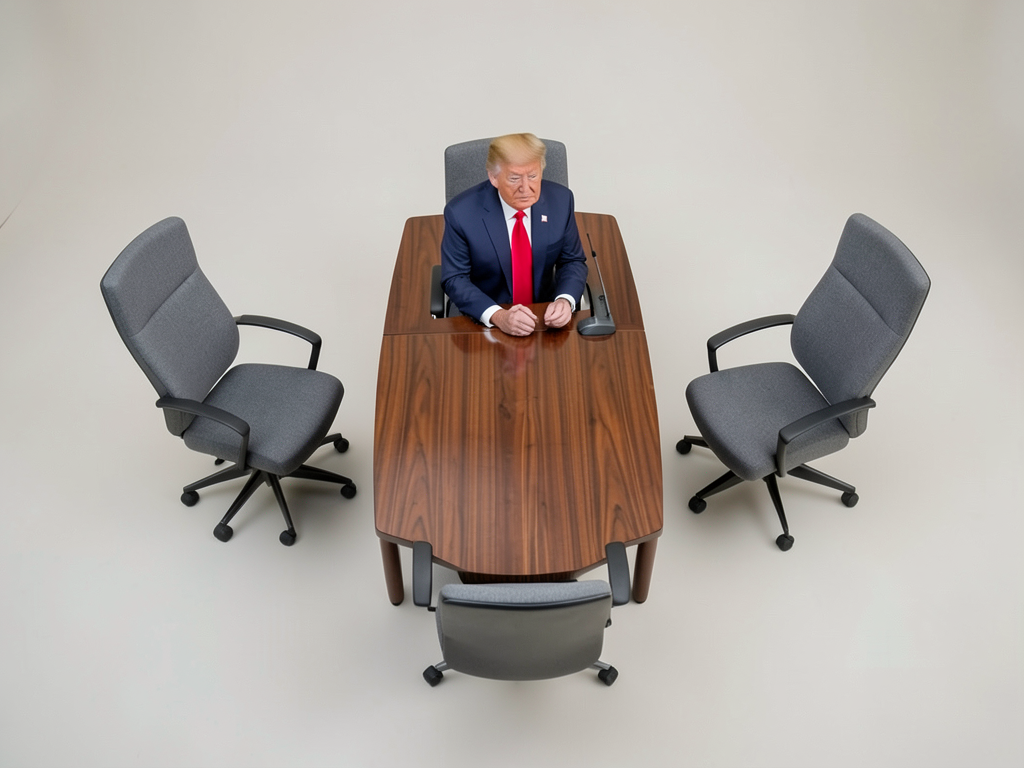
US President Donald Trump has signaled a dramatic shift away from immediate military action against Iran, saying fresh strikes are highly unlikely if diplomatic talks make progress—a development with profound implications for Pakistan’s precarious position between Washington and Tehran.
In a phone interview with CNN on Sunday, Trump indicated that renewed attacks would depend on whether Iran signs what he called a very strong agreement. He acknowledged that the Iran conflict contributed to Republican losses in recent midterm elections, a political reality that appears to have tempered his military ambitions.
Yet even as Trump extends an olive branch publicly, Washington is tightening the noose around Iran through other means. The US military announced the creation of Task Force Iron Gate, a 20-member unit designed to disrupt weapons shipments and sanctioned materials crossing Iran’s land borders and the Caspian Sea. The initiative represents a significant escalation in economic warfare that could directly affect Pakistan’s western frontier.
For Pakistan, the developments present a familiar dilemma. Islamabad maintains crucial economic and security ties with both Washington and Tehran, sharing a 900-kilometer border with Iran. Any intensification of US pressure on Iranian land routes inevitably draws Pakistan into the crossfire, forcing difficult choices about border security, trade flows, and regional alignment.
The diplomatic opening Trump described remains fragile at best. Secretary of State Marco Rubio told reporters that Iranian demands in negotiations were outrageous and unrealistic, suggesting no breakthrough is imminent. Meanwhile, Iran has laid down seven preconditions for any talks with Washington, with a senior Iranian security official on Monday flatly ruling out negotiations until those conditions are met.
Iranian President Masoud Pezeshkian struck a more conciliatory tone, saying Tehran remains open to dialogue to end the current state of neither war nor peace. He emphasized that Iran would negotiate with dignity but would not surrender to pressure—a position that mirrors Pakistan’s own careful balancing act in regional affairs.
The military dimension of the crisis continues unabated. Both countries reported shipping incidents in or near the Strait of Hormuz over the weekend, with Iran claiming two oil tankers hit mines and the US saying its air force disabled a commercial vessel attempting to breach the blockade. These maritime confrontations threaten global energy supplies and could drive up fuel costs in Pakistan, which already struggles with energy security.
Trump’s reference to identifying 38 bridges in Iran that could be destroyed in one hour underscores that military options remain very much on the table despite his diplomatic rhetoric. The president’s political calculations appear driven partly by domestic concerns, with Vice President JD Vance directly blaming the Iran war for Republican electoral losses.
Turkey’s President Recep Tayyip Erdogan has joined calls for restraint, telling Trump in a recent phone conversation that Ankara does not want to see new attacks on Iran. The Turkish position reflects broader regional anxiety about escalation—concerns Pakistan shares given its own security challenges and economic vulnerabilities.
The new US task force targeting Iran’s land borders represents perhaps the most significant development for Pakistan. Based in Florida and comprising both civilian and military personnel, the unit will coordinate efforts to prevent movement of weapons systems, dual-use technologies, and sanctioned materials across Iranian territory. Iran’s Revolutionary Guards dismissed the initiative as doomed to fail, but the practical impact on cross-border dynamics remains uncertain.
For Pakistani policymakers, the situation demands careful navigation. Any perception of facilitating US pressure on Iran could damage relations with Tehran, while appearing too close to Iran risks Washington’s displeasure. The challenge is compounded by Pakistan’s own economic dependence on Gulf energy supplies that flow through the contested Strait of Hormuz.
As Trump’s diplomatic overture collides with Iran’s preconditions and continued military posturing from both sides, the region faces an extended period of uncertainty. Pakistan’s ability to maintain productive relationships with both powers while protecting its own interests will be tested in the months ahead.