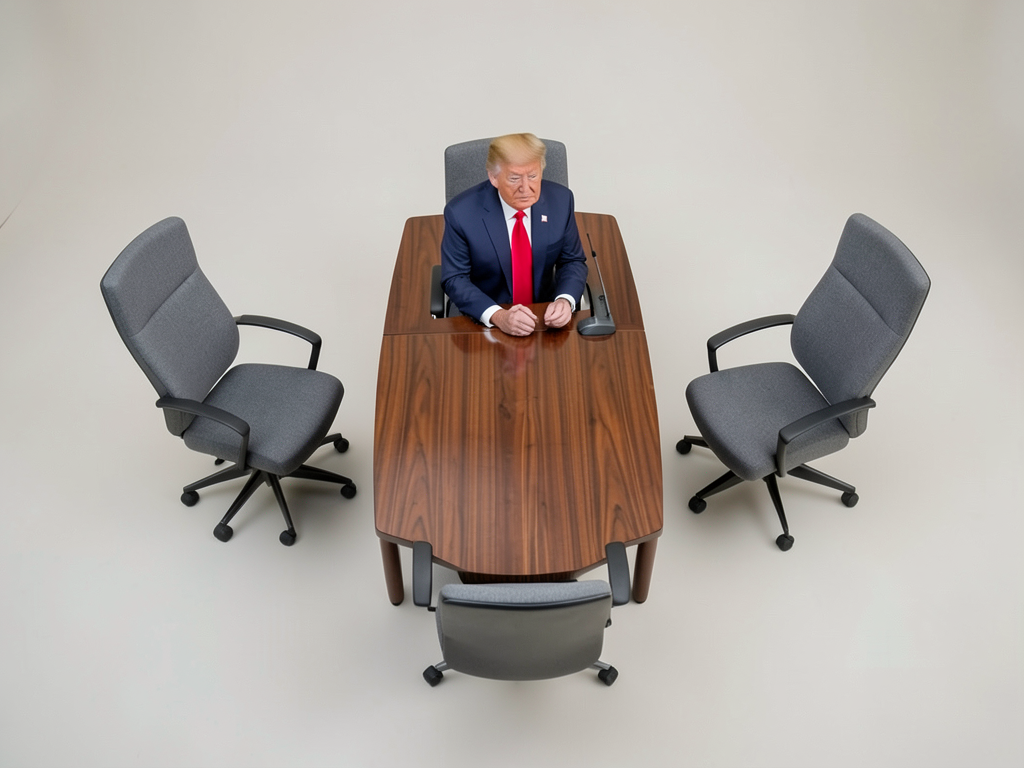
The head of the world’s most powerful artificial intelligence chipmaker finds himself at the centre of an explosive espionage controversy that has sent shockwaves through global technology markets and raised urgent questions about national security vulnerabilities in Silicon Valley.
Jensen Huang, the 63-year-old chief executive of Nvidia, is under FBI investigation following revelations that he maintained a relationship with a Chinese businesswoman whom American intelligence officials believe was working as an asset for Beijing. The scandal has already wiped billions off Nvidia’s market value, with shares plunging more than four percent on Monday as investors absorbed the implications.
US President Donald Trump confirmed the FBI probe during remarks on Monday, saying he was “amazed” by the allegations against Huang, who had been among his closest technology industry allies. Trump revealed he had spoken directly with the Nvidia boss, who insisted he had no knowledge the woman was allegedly gathering intelligence for China. “I know the FBI is looking into it,” Trump stated. “I think that he’ll be in good shape.”
The woman at the heart of the controversy has been identified as Alice Huang, a former executive at Singapore-based cloud computing firm Megaspeed International. Despite sharing a surname, she has no family connection to the Nvidia chief. According to reports, Alice Huang built her career in Chinese finance and investment management before transitioning into the semiconductor and cloud computing sectors. She became Megaspeed’s controlling shareholder in early 2023, with the company positioning itself as an Nvidia business partner across the Asia-Pacific region.
US authorities reportedly concluded that Alice Huang was passing sensitive information to Chinese intelligence services while cultivating her relationship with Jensen Huang. The Nvidia board launched its own internal investigation over the weekend to determine whether the company’s leader had been deliberately targeted by a foreign intelligence operation. In a message to employees, Huang acknowledged being unfaithful to his wife but provided no further details about the relationship.
China has vehemently rejected the espionage allegations. Foreign Ministry spokesperson Guo Jiakun dismissed the claims as “purely a groundless accusation, slander, and a smear” during a press briefing in Beijing. Chinese state media and public commentators have rallied behind this denial, framing the controversy as politically motivated.
The timing of the scandal could hardly be worse for Nvidia. The company has become synonymous with the artificial intelligence revolution, manufacturing the advanced processors that power everything from ChatGPT to autonomous vehicles. Huang himself has achieved celebrity status, particularly across Asia, where he regularly draws crowds of admirers seeking selfies and autographs. His signature leather jacket has become an iconic symbol of the AI boom.
Yet despite his rock-star persona and central role in Nvidia’s success, Huang does not control the company through special voting shares like other tech founders. He holds approximately 3.6 percent of Nvidia stock, making him the fifth-largest shareholder, but relies on an unusually flat management structure where dozens of executives report directly to him to maintain his grip on operations.
The controversy has already triggered legal action. Shareholders filed a proposed class-action lawsuit on Monday accusing Huang and Nvidia of defrauding investors by concealing his connections to a suspected Chinese intelligence operative. Meanwhile, American lawmakers are seizing on the scandal to push for tighter restrictions on advanced chip exports to China.
House Democratic leader Hakeem Jeffries called for Congress to demand more answers and pass defence legislation that would further limit Beijing’s access to cutting-edge semiconductor technology. The relationship between Huang and the suspected intelligence asset has intensified concerns that China may be exploiting personal vulnerabilities to gain access to America’s most sensitive technological capabilities.
Megaspeed itself has faced scrutiny over whether it helped Chinese companies circumvent US export controls designed to prevent advanced Nvidia chips from reaching China. Shipping records show the company’s Indonesian subsidiary imported Nvidia hardware including high-performance H100 processors between 2024 and 2026, though no formal violations have been publicly established.
Trump’s relationship with Huang has been notably warm. The president awarded him America’s highest scientific honour in October, the same day Trump disclosed trading up to $1.6 million in Nvidia shares. Reports suggest Trump was briefed on Huang’s relationship with the suspected Chinese agent but chose not to take immediate action.
Market analysts remain divided on whether the investigation will force Huang to step down. Most believe his position is secure given his irreplaceable role in driving Nvidia’s strategy and vision. “Nvidia is not an ordinary company and Jensen is not an ordinary CEO; he is Nvidia,” noted Stacy Rasgon, an analyst at Bernstein. “He clearly sets the long-term strategy and direction, and pulls most of the company’s strings himself.”
Nevertheless, the scandal has exposed uncomfortable questions about how easily foreign intelligence services can penetrate the inner circles of America’s technology elite, and whether personal relationships are being weaponized to compromise national security in the age of artificial intelligence.