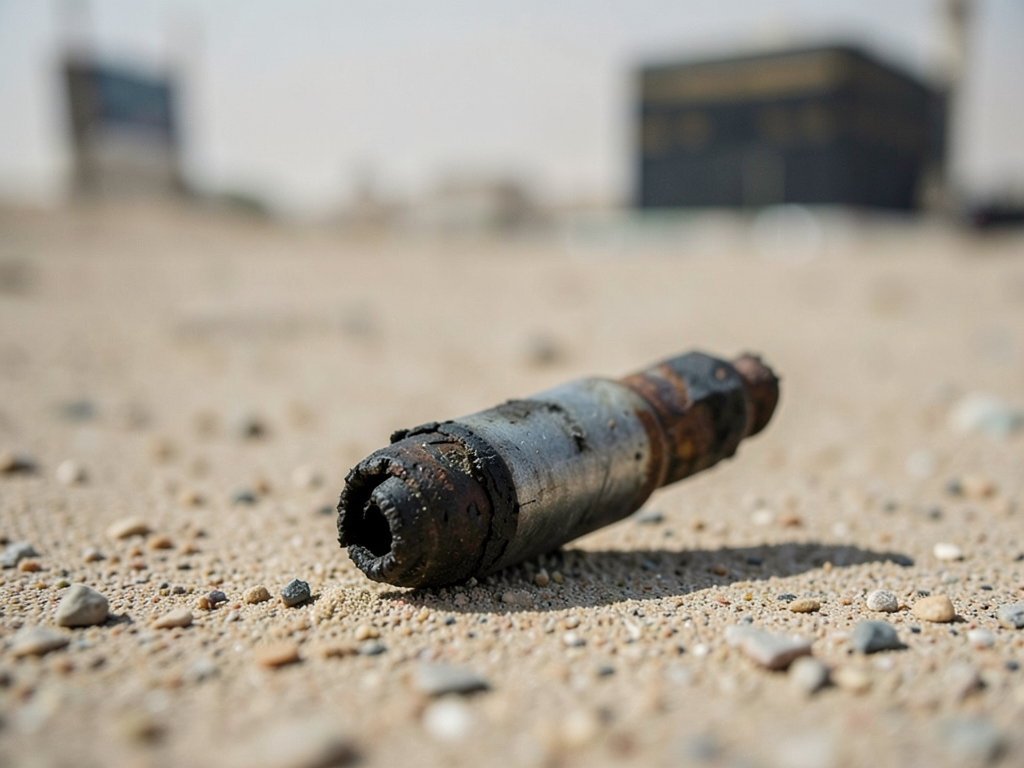
Fragments from ballistic missiles fired by Yemen’s Houthi forces crashed into a village near Makkah early Thursday, sending shockwaves through the Muslim world and raising fresh concerns about the safety of Islam’s holiest sites.
The debris landed in Sabuhah village after Saudi air defense systems successfully destroyed two incoming missiles launched from Houthi-controlled territory in Yemen, according to Saudi Civil Defense authorities. The interception prevented a direct strike on populated areas in the Makkah region, home to the Grand Mosque visited by millions of pilgrims annually.
The same night, coalition forces shot down a drone over Saudi Arabia’s Eastern Province, the kingdom’s oil-rich industrial heartland. Just one day earlier, Saudi defenses had intercepted five missiles and two drones in a coordinated assault targeting multiple regions including Riyadh and western Saudi Arabia.
The escalating attacks have increasingly threatened critical infrastructure across the kingdom. On Sunday, Houthi forces damaged an administrative building belonging to state oil giant Aramco in Riyadh’s financial district. While Saudi officials reported no casualties and only limited damage, the strike shattered windows across multiple floors and demonstrated the Houthis’ expanding reach.
The Iran-backed Houthi movement has claimed responsibility for targeting King Khalid International Airport, Aramco storage facilities, and other strategic locations throughout Riyadh. These attacks follow a devastating October 10 assault on the same airport that killed 13 people and injured over 300, marking one of the deadliest single incidents in the ongoing conflict.
Meanwhile, Houthi-controlled media reported Saudi coalition airstrikes hitting a gas station and state oil company building in Yemen’s capital Sanaa, though Saudi authorities have not confirmed these operations.
The violence represents a dramatic deterioration in regional security since July, when a UN-brokered ceasefire that had largely held since 2022 finally collapsed. Both sides have since intensified military operations, with the Houthis launching increasingly sophisticated missile and drone campaigns while the Saudi-led coalition conducts strikes aimed at degrading Houthi military capabilities.
Coalition spokesman Turki al-Maliki announced on November 1 that Saudi forces were conducting operations specifically designed to neutralize Houthi resources supporting missile and drone production, emphasizing the goal of protecting civilian populations and critical infrastructure.
For Pakistan, which sends hundreds of thousands of pilgrims to Makkah and Madinah each year for Hajj and Umrah, the proximity of military strikes to Islam’s holiest sites raises profound concerns. The Pakistani diaspora working across Saudi Arabia’s major cities also faces heightened security risks as the conflict intensifies.
The attacks on oil facilities carry additional implications for Pakistan’s energy security, as the country depends heavily on Saudi petroleum imports and remittances from Pakistani workers in the kingdom’s energy sector. Any disruption to Saudi oil production or regional stability could ripple through Pakistan’s already fragile economy.
As the conflict shows no signs of abating, Muslim communities worldwide are watching anxiously, hoping that diplomatic efforts can prevent further escalation near sites considered sacred by nearly two billion believers.